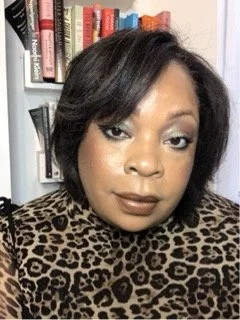
Black History Month and Beauty: Let’s Stop Pretending We Don’t See It
Every Black History Month, the beauty industry reaches for the same language.
Community. Togetherness. Celebration.
And every year, I try to meet that energy where it is.
This year, I couldn’t.
So I wrote.
When I look back at what led me to becoming a founder again in this industry after taking a break after losing Joli, I see a very clear pattern. I saw it then, and I still see it now. Black women leaving corporate beauty brands not because we weren’t capable, but because we were tired of shrinking ourselves so other people could stay comfortable. Overqualified for promotions, but always qualified enough to fix problems, mentor teams, and carry brands forward without recognition.
I lived that.
I worked for MAC. A company I loved and still love. A brand that continues to benefit from the innovation, mentorship, and leadership of Black women who are still there today. Women who are brilliant, creative, strategic, and driving the business in real ways, yet still overshadowed by people who choose not to see them and who take every opportunity to dim their light so it doesn’t outshine theirs.
I allowed it longer than I should have.
The part I didn’t talk about when I left is that I had just earned a promotion I worked my ass off for, mostly because I felt like I had to prove myself. By the time I got the position, all I heard was that I got it because someone else molded me into the person capable of doing a job I should have gotten years prior. What should have been a celebration felt like a slap in the face. Because the truth is, the only thing those people molded me into was someone who learned exactly how not to lead. I learned what not to do, what not to say, and what kind of environment I never want to create for anyone else.
I shrank myself to fit a narrative that didn’t serve me. I muted my instincts. I tried to make myself easier to digest. It broke me down to the point where I needed to take a leave of absence. And when I finally walked away, some people thought they won.
They didn’t.
I chose myself. I found my voice. I found my self-worth. And I saw something bigger for myself. I saw a need to build something that gave me the opportunity to hire people and make sure I never made them feel the way I was made to feel.
Black women have the right to be angry.
We have the right to be angry watching visionary icons like Pat McGrath face bankruptcy conversations while brands like Rhode and Rare Beauty are celebrated for ideas Black women have been executing for years, just packaged in ways the industry finds more comfortable and digestible. We have the right to be angry pitching to brands that publicly champion inclusivity while quietly disengaging once visibility and capital arrive.
I’ve worked directly with some founders when they saw me as “the help”. I worked with the founder of Saie when she was hiring artists for a shoot for another brand. I congratulated her when she left to build Saie full-time. She remembered me then. Now, after her capital, awards, and visibility, my outreach to collaborate on events, content, and product placement is met with silence. That shift says more than a no ever could.
I’m only mentioning it because it keeps happening. Brands founded by white women, or women who benefit from proximity to whiteness, have profited from saying all the right things. They perform their version of diversity in content, campaigns, dinners, and panels. They know the language. They know what to post. They know how to look aligned. But when it actually matters, when collaboration would mean sharing visibility, resources, or power, they stay quiet. I’ve privately called out the founders of other brands like Ouai and Chill House before, hoping it was a misunderstanding or a missed email, but this is a pattern, and it’s time for it to end. It’s time to stop pretending the problem is vague. It’s time to highlight the brands and founders who remain part of it.
I’ve moved on from ever wanting to work with or support these brands, even though I’ve highlighted and supported their products previously. I hope they understand it’s time to examine their biases and make a change. One or two Black women who work for your company but isnt apart of the team that makes decisions and drives the brand forward isn’t enough. And for anyone reading this who still supports them, that's your choice. I will be highlighting other brands throughout this series.
Black women are taken advantage of for their aesthetic proximity, not strategic power. For inspiration, and the BILLIONS of dollars we spend in the industry, not on leadership. For labor, not equity.
Even though supporting one another within our community matters deeply, it cannot be the only path forward. Community support alone does not create scale. It does not unlock capital. It does not change who gets visibility at the highest levels. That only happens when larger companies, founders, platforms, and institutions that already receive the visibility we deserve choose to collaborate with us, highlight us, and invest in us beyond optics.
Being invited to a “diverse” dinner, panel, or campaign is not an elevation. It is often containment.
But this work cannot live only with us; that is why organizations like Harlem Fashion Row, founded by Brandice Daniel, and Texture on Set, founded by Naeemah Fond, The Creative Collective NYC, founded by Imani Ellis, who puts on events like CultureCon, are building real infrastructure and opening doors that never existed.
They exist because Black creatives needed amplification, not permission. These platforms understand that visibility without power is not enough.
More Black makeup artists and hairstylists deserve to be on the front lines of this industry, not just referenced on mood boards. Models should never arrive on set unsure if the artist can do their hair or skin, especially when the reference images came directly from Black women. Black artists are expected to arrive overprepared and overqualified, while others are allowed to show up underprepared without consequence.
That double standard is not accidental.
A client once told me she tried to book GlamSquad and was told they don’t service her area. She lived in Crown Heights. That wasn’t a misunderstanding. That was a message. When companies claim to serve Brooklyn but exclude neighborhoods like Bed-Stuy, Flatbush, or Crown Heights, they are saying the quiet part out loud.
We are not another Glamsquad. We don’t believe in selective accessibility.
I created Triple Eight Creative so Black women could call a beauty service and feel confident. Confident that we understand their hair, their skin, their lives. What started as mobile beauty became something larger, blending beauty with hospitality, corporate spaces, and environments where women need to feel safe about who is touching their face and shaping their image.
I didn’t leave to lose. I left to build.
A Final Letter
If we weren’t so powerful, they wouldn’t be fighting so hard to humble us.
Black women, take this month to live loudly. Get angry. Be joyful. Love yourself without apology. Support one another intentionally, and demand more from the systems that benefit from our talent while resisting our leadership. And to everyone else reading this, if you claim to care about equity in beauty, your actions need to match.
Silence is complicity. Performative posts are not enough. Collaborate, invest, and share power. Or get out of the way.
Black Women, you didn’t imagine what you experienced. You weren’t asking for too much. You weren’t difficult for wanting more. You were responding to a system that depends on your silence.
Black women are not the trend. We are the foundation.
And this chapter, #ForTheLovers, is about choosing ourselves anyway.
Editor’s Note
This chapter of The Winter Edit marks a shift.
#ForTheLovers is the finale, but it’s also a beginning.
This season has been about showing up for yourself, shedding what no longer fits, and telling the truth even when it’s uncomfortable. As Black History Month, Valentine’s season, and New York Fashion Week collide, this edit holds space for celebration, honesty, and power. This is not about perfection. It’s about alignment.
This piece opens the door.
This is me shedding regret and fear. This is me stepping into truth. This is me allowing a little villain energy when it comes to the success of Black women, because protecting our power is not wrong.
Watch the latest Beauty Edit Video..